
From Concept to Prototype: The Tools of Power-Supply Design
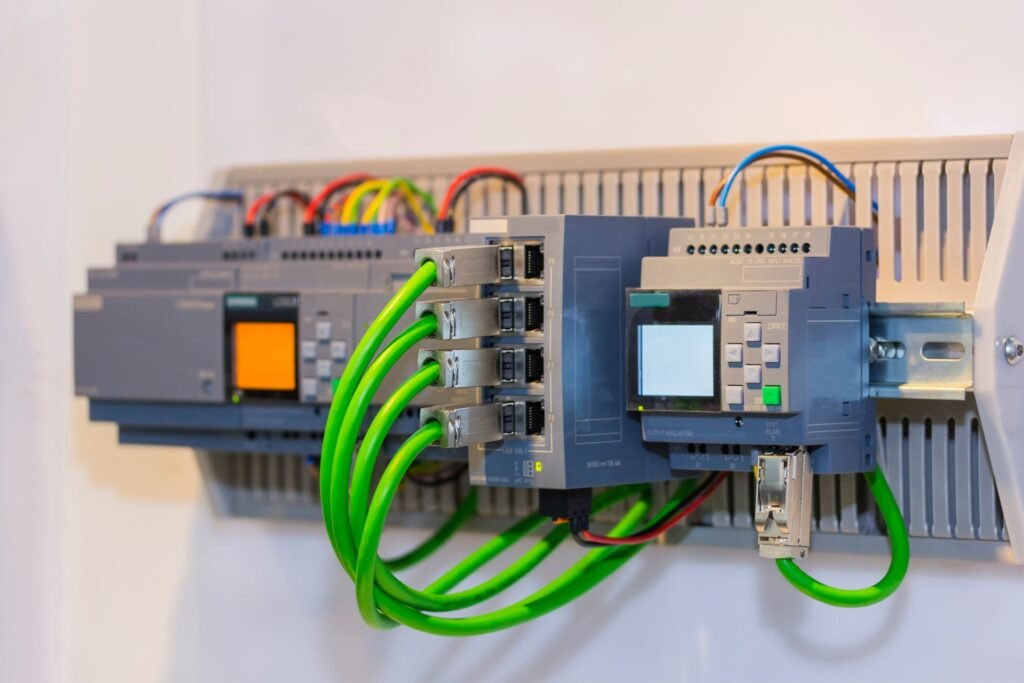
Even as OEMs accelerate product cycles, power-supply design remains a critical bottleneck. The ecosystem of development tools that spans system-level architecture, component selection, simulation, and bench validation helps engineering teams compress schedules while meeting tight performance and regulatory requirements. These tools generally organize into five functional groups—a structure that has become standard across the industry.
The Five Pillars of Power-Supply Design Tools
Distinct tool categories cover each stage of the design flow, from topology selection through final prototyping. Understanding their roles allows organizations to invest strategically in the software and hardware that reduce design spins and bring compliant products to market faster.
Power-System Designers
At the highest level, power-system designer environments let engineers sketch architectures and explore trade-offs across conversion stages. They incorporate databases of real components, allowing the designer to evaluate efficiency, thermal behavior, and bill-of-materials cost before committing to a specific topology. Such platforms often integrate standards-based checks for electromagnetic compatibility and safety clearances, helping teams avoid late-stage rework. Many also link to Analog & Power ICs catalogs so that selected devices map directly to manufacturer specifications.
Power-Supply Calculators
For quick feasibility checks, online calculators solve the fundamental equations of buck, boost, flyback, and other topologies. Engineers enter input-voltage range, output power, and switching frequency to obtain key component values—inductance, capacitance, and duty cycle. Suppliers of controllers and discrete semiconductors maintain these tools, and they frequently incorporate derating guidelines tied to recognized standards. The immediate feedback loop encourages exploration of alternative passive components without manual iterative math.
Digital Power-Supply Configuration Tools
As digital control proliferates, configuration utilities have become indispensable. These vendor-specific programs write to registers inside Digital & Processing ICs, setting parameters such as PID coefficients, fault thresholds, and sequencing delays. Rather than hand-coding, engineers use graphical interfaces to fine-tune dynamic responses and then export verified configuration files for the prototype. This category narrows the gap between data-sheet promises and silicon behavior, especially when adaptive voltage scaling or multi-rail sequencing is involved.
Circuit Simulation Tools
Before any hardware is built, SPICE-based and mixed-signal simulators model the power train under static and transient conditions. They predict startup inrush, output ripple, and regulation stability—insights that are critical for meeting agency certifications. Library models now extend beyond ideal elements to include parasitics of PCB traces and temperature-dependent semiconductor characteristics. Distributed engineering teams frequently share simulation projects, aligning the entire group around a single source of truth for the power architecture.
Hardware Evaluation Platforms
Evaluating a controller or converter on a manufactured board remains the definitive validation step. Evaluation modules and Modules & Dev Boards replicate reference designs, exposing test points, jumpers, and communication interfaces. Power designers probe these boards to confirm efficiency curves, EMI signatures, and thermal images against simulated data. Many evaluations now include companion daughter cards that mimic load transients or battery profiles, giving the bench test a level of realism that pure simulation cannot deliver.
Accelerating Prototyping in a Constrained Supply Chain
Supply-chain volatility has added urgency to the toolset conversation. When a preferred MOSFET or capacitor goes on allocation, designers must re-spin calculations and simulations quickly to qualify alternates. A tightly integrated tool chain—from system designer to calculator to simulator—can cut the re-evaluation window from weeks to days. Hardware evaluation platforms also allow side-by-side testing of pin-compatible replacements, a workflow that directly supports procurement resilience without sacrificing compliance or performance timelines.
What Remains Unconfirmed
No single tool suite eliminates all risks. Simulation accuracy depends on model fidelity, and evaluation boards present idealized layout conditions that rarely survive into the final product. Published tool comparisons seldom include independent benchmark data, leaving engineers to rely on vendor claims. As artificial-intelligence features begin to appear in design assistants, their impact on time-to-prototype and design quality has yet to be measured in a controlled, replicable manner.
Why This Matters
Grouping power-design tools into five functional categories gives engineering organizations a framework to evaluate, acquire, and integrate software and hardware that directly compress time-to-prototype. This structured approach becomes even more critical when supply-chain disruptions force rapid component substitution, as it enables designers to re-verify alternates efficiently without sacrificing reliability or regulatory compliance.
FAQ
What are the five categories of power-supply design tools mentioned in the report?
The five categories are power-system designers, power-supply calculators, digital power-supply configuration tools, circuit simulation tools, and hardware evaluation platforms. Each serves a distinct stage, from initial architecture selection to bench validation of a physical prototype.
How do these tools help when component shortages occur?
When a key component becomes unavailable, designers can quickly update calculations and simulations within the integrated tool chain to qualify alternate parts. Hardware evaluation boards then allow direct side-by-side testing of substitutes, dramatically reducing the time needed to re-verify performance and maintain compliance.
What is the difference between a power-system designer and a circuit simulator?
A power-system designer operates at the architecture level, helping select topologies and major components based on efficiency and cost targets. Circuit simulators work at a lower level, modeling the electrical behavior of an already-chosen circuit, including parasitics, transients, and thermal effects, to predict real-world performance.
When do engineers typically use hardware evaluation boards?
Evaluation boards are used after initial design and simulation, serving as the first physical check of a power-supply design. They provide a controlled environment to measure parameters like efficiency, electromagnetic interference, and thermal response, and often act as a reference for the final printed-circuit layout.
Sources
Source: Home | Electronic Design